

Advanced Certification in Agentic AI Engineering



Instructor-led Advanced Agentic AI live online Training Schedule
Flexible batches for you
Why enroll for Advanced Certification in Agentic AI Engineering?


Agentic AI Engineering Training Benefits
Why Advanced Certification in Agentic AI Engineering from edureka
Live Interactive Learning
- World-Class Instructors
- Expert-Led Mentoring Sessions
- Instant doubt clearing
Hands-On Project Based Learning
- Industry-Relevant Projects
- Course Demo Dataset & Files
- Quizzes & Assignments
Industry Recognised Certification
- Edureka Training Certificate
- Graded Performance Certificate
- Certificate of Completion
Like what you hear from our learners?
Take the first step!
About your Advanced Certification in Agentic AI Engineering
Skills Covered
Tools Covered
Advanced Agentic AI Course Curriculum
Curriculum Designed by Experts

Module 01: Python & AI Dev Environment Setup
Topics
- Overview of the Agentic AI ecosystem and where Python fits
- Setting up Python with pyenv for version management
- Creating and managing virtual environments using venv and conda
- Configuring VS Code with AI-friendly extensions and settings
- Setting up Jupyter Lab for interactive AI experimentation
- Understanding Python project structure for production AI apps
- Managing dependencies with pip and requirements.txt
- Securely managing API keys using python-dotenv and .env files
- Introduction to Git: initialising repos, branching, and committing
- Pushing AI projects to GitHub with a proper .gitignore
- Writing asynchronous Python with asyncio for concurrent LLM calls
- Comparing sequential vs concurrent API calls: performance benchmarking

- Setting Up Your Python AI Project from Scratch
- Managing API Keys Securely with python-dotenv
- Running Concurrent LLM Calls with asyncio

- Python
- Virtual Environments
- Git & GitHub
- asyncio
- Project Structure
- Secret Management
Module 02: FastAPI, Streamlit & Gradio for AI Apps
Topics
- REST API fundamentals: HTTP methods, status codes, request/response lifecycle
- FastAPI project structure: routers, models, and dependency injection
- Defining Pydantic models for request validation and response schemas
- Building async FastAPI endpoints for LLM-powered routes
- Streaming LLM responses using Server-Sent Events (SSE)
- Handling file uploads in FastAPI for document processing pipelines
- Running and testing FastAPI with Uvicorn and Swagger UI
- Streamlit fundamentals: layout, widgets, session state, and caching
- Building a real-time streaming chat UI in Streamlit
- Gradio components: text, file, image inputs and markdown outputs
- Creating shareable Gradio demos and deploying to HuggingFace Spaces
- Wiring a Streamlit or Gradio front-end to a FastAPI backend
- Comparing Streamlit vs Gradio: when to use which

- Building Your First FastAPI LLM Endpoint
- Streaming AI Responses Live in a Streamlit UI
- Creating a Shareable AI Demo with Gradio
- Connecting a Gradio Front-End to a FastAPI Backend

- FastAPI
- Streamlit
- Gradio
- REST API Design
- Server-Sent Events
- Uvicorn
- Pydantic
Module 03: LLM Fundamentals, Context & Prompt Engineering
Topics
- How large language models work: tokenisation, attention, and next-token prediction
- Understanding context windows: limits, costs, and implications for agents
- The OpenAI API: chat completions, parameters, and response structure
- The Anthropic API: messages format, system prompts, and model differences
- Structuring system prompts for domain-expert personas
- Zero-shot, one-shot, and few-shot prompting patterns
- Chain-of-Thought (CoT) prompting for complex reasoning tasks
- Tree-of-Thought (ToT) for branching multi-path reasoning
- ReAct prompting: combining reasoning and action steps
- Structured outputs using JSON mode and response schemas
- Function calling: defining tools and routing user intent
- Context management strategies: chunking, summarisation, and windowing
- Measuring and optimising token usage with tiktoken
- Evaluating and benchmarking LLM output quality

- Comparing Zero-Shot, Few-Shot, and Chain-of-Thought Prompts
- Extracting Structured Data with JSON Mode and Pydantic
- Routing User Intent with Function Calling

- Prompt Engineering
- OpenAI API
- Anthropic API
- Context Management
- Function Calling
- JSON Mode
- Token Optimisation
Module 04: Embeddings, Vector Databases & Semantic Search
Topics
- What vector embeddings are and why they matter for AI agents
- Embedding models: OpenAI text-embedding-3 and HuggingFace sentence-transformers
- Generating embeddings for text, documents, and structured data
- ChromaDB architecture: collections, documents, metadata, and IDs
- CRUD operations and metadata filtering in ChromaDB
- FAISS index types: Flat L2, IVF, HNSW — trade-offs explained
- Building and querying a FAISS index from a document corpus
- Nearest-neighbour retrieval: understanding similarity metrics (cosine, L2, dot product)
- Hybrid search: combining BM25 keyword scoring with semantic vector scores
- Chunking strategies for effective embedding: fixed, sentence, and recursive
- Benchmarking ChromaDB vs FAISS: speed, accuracy, and scalability
- Visualising embedding clusters with UMAP to understand semantic groupings
- RAG architecture overview: retriever, generator, and the full pipeline

- Building a Semantic Search Engine with ChromaDB
- Benchmarking FAISS Flat vs HNSW Retrieval Speed
- Implementing Hybrid Keyword and Semantic Search
- Visualising Document Embeddings with UMAP

- Vector Embeddings
- ChromaDB
- FAISS
- Semantic Search
- Hybrid Search
- sentence-transformers
- RAG Fundamentals
Module 05: LangChain Core - Chains, Memory & RAG
Topics
- LangChain architecture: runnables, the pipe operator, and the LCEL paradigm
- Building chains with LCEL: prompt | llm | parser patterns
- Prompt templates: ChatPromptTemplate, MessagesPlaceholder, and partial templates
- Output parsers: StrOutputParser, JsonOutputParser, and PydanticOutputParser
- Conversational memory types: BufferMemory, SummaryMemory, VectorStoreMemory
- Maintaining multi-turn conversation history across sessions
- Document loaders: PDF, web, CSV, Notion, and custom loaders
- Text splitters: RecursiveCharacterTextSplitter and SemanticChunker
- Building a RAG pipeline: loader, splitter, embedder, retriever, generator
- Retriever types: VectorStoreRetriever, MultiQueryRetriever, ContextualCompressionRetriever
- LangChain callbacks and hooks for logging and monitoring
- Chaining multiple retrievers and combining results

- Building an LCEL Chain with Memory for Multi-Turn Conversations
- Creating a RAG Pipeline over a PDF Knowledge Base
- Comparing Multi-Query vs Single-Query Retrieval Quality

- LangChain
- LCEL
- RAG Pipelines
- Conversational Memory
- Document Loading
- Text Splitting
- Retrieval Strategies
Module 06: LangChain Agents & Tool Use
Topics
- Agent fundamentals: perception, reasoning, action, and observation loop
- ReAct agent pattern: interleaving reasoning traces and tool calls
- Plan-and-Execute pattern: generating a plan first, then executing steps
- LangChain built-in tools: Tavily Search, Python REPL, Wikipedia, and DuckDuckGo
- Creating custom tools with the @tool decorator and StructuredTool
- Defining tool input schemas with Pydantic for safe structured arguments
- AgentExecutor: configuration, max iterations, early stopping, and verbose mode
- Structured output agents: forcing final answers into typed Pydantic objects
- Connecting agents to SQL databases with SQLDatabaseToolkit
- Multi-step reasoning: chaining tool outputs as inputs to subsequent tool calls
- Handling tool failures: try/except patterns and automatic retry logic
- Streaming intermediate agent steps to a UI in real time

- Building a ReAct Agent with Web Search and Python REPL Tools
- Connecting an Agent to a SQL Database for Natural Language Queries
- Adding Retry Logic and Error Handling to a Tool-Calling Agent

- LangChain Agents
- ReAct Pattern
- Custom Tool Development
- AgentExecutor
- SQL Agent
- Structured Output
- Tool Error Handling
Module 07: LangGraph - Stateful Workflows & Routing
Topics
- Why LangGraph: limitations of linear chains for complex agentic workflows
- Core LangGraph concepts: nodes, edges, and the state schema
- Defining a TypedDict state and passing it through the graph
- Building a StateGraph: adding nodes, setting entry points, and compiling
- Conditional edges: routing to different nodes based on state values
- MessageGraph for chat-style workflows with message history
- Streaming node-by-node output during graph execution
- Adding human-readable labels and descriptions to graph nodes
- Visualising and debugging graphs in LangGraph Studio
- Building a specialist routing system: classifier node + expert nodes
- Handling terminal states: defining END conditions and exit paths
- Composing reusable node functions with clean state interfaces
- Testing individual nodes in isolation before wiring the full graph

- Building a Conditional Routing Graph with Specialist Nodes
- Streaming Live Node-by-Node Output in LangGraph
- Debugging and Visualising Your Graph in LangGraph Studio
- Building an Order-Processing State Machine with Fail and Retry States

- LangGraph
- StateGraph
- Conditional Routing
- Graph Compilation
- LangGraph Studio
- Stateful Agent Design
- Node Streaming
Module 08: LangGraph - Cycles, HIL & Persistence
Topics
- Cycles and loops: when and why to add feedback loops to a graph
- Implementing self-correction loops: generate, evaluate, revise
- Human-in-the-loop (HIL): understanding interrupt_before and interrupt_after
- Pausing a graph, collecting human input, and resuming from a checkpoint
- Building approval gate workflows: draft, review, approve, publish
- Checkpointers: what they are and why persistence matters for agents
- SQLite checkpointer: setup, configuration, and state recovery
- Redis checkpointer: setup for high-throughput production environments
- Resuming an interrupted workflow after a simulated crash
- The Send API: dispatching work to parallel worker nodes
- Aggregating parallel node results back into a shared state
- Sub-graphs: building modular graph components and composing them
- Sharing state across parent and sub-graphs safely

- Adding a Human Approval Gate with Interrupt and Resume
- Implementing SQLite Checkpointing and Crash Recovery
- Fanning Out Tasks to Parallel Nodes with the Send API

- Human-in-the-Loop
- LangGraph Checkpointers
- SQLite Persistence
- Redis Persistence
- Parallel Execution
- Sub-graph Composition
- Cycle Design
Module 09 - LangSmith - Tracing, Evaluation & Testing
Topics
- Why observability matters for LLM applications in production
- LangSmith platform overview: projects, runs, traces, and feedback
- Instrumenting LangChain and LangGraph runs with LangSmith tracing
- Inspecting individual spans: inputs, outputs, latency, and token cost
- Creating evaluation datasets: golden QA pairs and edge cases
- Running automated evaluations with built-in LangSmith evaluators
- LLM-as-judge evaluation: writing a custom grading prompt
- Heuristic evaluators: rule-based checks for format, length, and keywords
- Regression testing: comparing two prompt versions on the same dataset
- A/B testing agent behaviours: setting up experiments and tracking metrics
- Annotating runs with human feedback for RLHF dataset creation
- Production monitoring dashboards: latency, error rate, and cost over time
- Setting up alerts for anomalous agent behaviour in production

- Tracing a LangGraph Agent End-to-End in LangSmith
- Running an Automated Evaluation Suite with LLM-as-Judge
- Setting Up an A/B Experiment to Compare Two Agent Strategies

- LangSmith
- LLM Tracing
- Automated Evaluation
- LLM-as-Judge
- Regression Testing
- A/B Testing
- Production Monitoring
Module 10: Model Context Protocol: Architecture & Custom Servers
Topics
- What is the Model Context Protocol and why Anthropic created it
- MCP architecture: hosts, clients, and servers — roles and responsibilities
- The three MCP primitives: resources, tools, and prompts
- JSON-RPC 2.0 transport layer: stdio and HTTP/SSE communication
- Setting up the MCP Python SDK and scaffolding a minimal server
- Defining and exposing custom tools from an MCP server
- Defining resource endpoints that expose live or static data sources
- Implementing prompt templates as MCP primitives
- Tool discovery and capability negotiation between client and server
- Connecting a custom MCP server to Claude Desktop
- Connecting a custom MCP server to VS Code Copilot
- MCP security model: permission scopes and access control
- Server-side input validation and request sanitisation
- Debugging MCP servers with logging and the MCP Inspector tool

- Scaffolding and Connecting Your First Custom MCP Server
- Exposing a Live Data API as an MCP Resource Endpoint
- Implementing Permission Checks and Input Validation in MCP
- Debugging an MCP Server with the MCP Inspector Tool

- Model Context Protocol
- MCP Python SDK
- Custom MCP Servers
- Claude Desktop Integration
- Tool Discovery
- MCP Security
- JSON-RPC
Module 11: MCP - Ecosystem Integrations
Topics
- Overview of the MCP ecosystem: official and community servers
- SQLite MCP server: exposing schema, running queries, and returning results
- Filesystem MCP server: safe file read, write, list, and move operations
- GitHub MCP server: managing issues, PRs, branches, and comments via Claude
- Playwright MCP server: browser automation and structured data extraction
- Chaining multiple MCP servers in a single Claude session
- Using MCP servers as tools inside LangChain agents
- Using MCP servers as tools inside LangGraph nodes
- Integrating MCP into a CrewAI agent as an external tool
- Building a report pipeline: SQLite MCP query to Filesystem MCP write
- Security considerations when chaining multiple MCP servers
- Production deployment patterns for MCP servers

- Chaining SQLite MCP and Filesystem MCP to Build a Report Pipeline
- Managing a GitHub Repository via Claude and the GitHub MCP Server
- Automating Browser Data Extraction with Playwright MCP

- SQLite MCP
- GitHub MCP
- Playwright MCP
- Filesystem MCP
- Multi-MCP Chaining
- MCP + LangGraph
- MCP + CrewAI
Module 12: Deep Agents - Reflection, Planning & Long-Term Memory
Topics
- What makes an agent 'deep': meta-cognition and self-awareness in LLMs
- Self-reflection loops: generate, critique against a rubric, revise
- Multi-turn reflection: iterating until a quality threshold is met
- Plan-and-Execute pattern: separating planning from execution
- Replanning: updating the plan mid-execution when new information arrives
- ReAct vs Plan-and-Execute: trade-offs and when to use each
- Long-term memory types: episodic, semantic, and procedural
- Building an episodic memory store with LangGraph and a vector DB
- Memory consolidation: summarising and compressing old episodic memories
- Semantic memory: storing facts and updating them across sessions
- Cross-session memory retrieval: using similarity search to recall past context
- Confidence and uncertainty estimation: flagging low-confidence answers
- Agent self-improvement: using evaluation scores to update future behaviour
- Combining reflection, planning, and memory into one unified agent architecture

- Building a Self-Critique and Revision Loop in LangGraph
- Implementing a Plan-and-Execute Agent with Mid-Run Replanning
- Adding Cross-Session Episodic Memory to an Agent

- Self-Reflection Loops
- Plan-and-Execute
- Episodic Memory
Module 13: CrewAI - Multi-Agent Orchestration & Integration
Topics
- CrewAI philosophy: role-based agents working as a collaborative team
- Core components: Agent, Task, Crew, and Process
- Defining agents: role, goal, backstory, and tools
- Defining tasks: description, expected output, and agent assignment
- Sequential process: tasks execute in order with output passed forward
- Hierarchical process: a manager agent routes and delegates tasks
- Inter-agent delegation: agents handing off work to more specialised peers
- Adding LangChain tools to CrewAI agents
- Adding MCP servers as tools within a CrewAI agent
- Combining CrewAI with LangGraph: Crew as a node in a stateful graph
- Parallelising research tasks across multiple agents simultaneously
- Handling crew failures: retry strategies and fallback agents
- Output parsing and structured results from a crew run
- Evaluating crew quality: scoring the final output against a rubric

- Building a Three-Agent Sequential Research and Writing Crew
- Switching to Hierarchical Mode and Observing Manager Delegation

- CrewAI
- Multi-Agent Orchestration
- Role-Based Design
- Hierarchical Process
- CrewAI + MCP
- CrewAI + LangGraph
Module 14 - Agentic RAG & GraphRAG
Topics
- RAG failure modes: hallucination, missed retrieval, and irrelevant context
- Diagnosing RAG failures systematically with RAGAS metrics
- Agentic RAG: the agent decides whether, what, and how to retrieve
- Self-RAG: retrieve, score chunk relevance, decide to regenerate, synthesis
- Corrective RAG (CRAG): falling back to web search when local KB fails
- Advanced chunking strategies: semantic chunking, late chunking, parent-child
- Re-ranking retrieved chunks with Cohere and cross-encoder models
- HyDE: generating a hypothetical answer to improve query embedding
- Query expansion: generating multiple reformulations to broaden recall
- GraphRAG: representing documents as a knowledge graph of entities and relations
- Building a knowledge graph from documents using NetworkX
- Multi-hop reasoning: traversing the graph to answer complex questions
- Hybrid RAG: combining graph traversal with vector similarity search
- Evaluating RAG pipelines with RAGAS: faithfulness, answer relevancy, context recall
- Benchmarking Agentic RAG vs standard RAG on the same test set

- Implementing Self-RAG with Relevance Scoring and Conditional Regeneration
- Building a Corrective RAG Pipeline with Web-Search Fallback
- Constructing a Knowledge Graph and Running Multi-Hop GraphRAG Queries
- Evaluating Your RAG Pipeline End-to-End with RAGAS

- Agentic RAG
- Self-RAG
- Corrective RAG
- GraphRAG
- Knowledge Graphs
- Re-ranking
Module 15: Dockerizing & Deploying AI Agents
Topics
- Docker fundamentals: images, containers, layers, and the build cache
- Writing a production Dockerfile for a Python FastAPI + LangChain application
- Multi-stage builds: separating build-time dependencies from the runtime image
- Docker Compose: defining multi-service stacks with service, network, and volume configs
- Composing a full agent stack: FastAPI, ChromaDB, Redis, and a worker service
- Environment variable management: .env files, Docker secrets, and runtime injection
- Container health checks: liveness, readiness, and graceful shutdown patterns
- Pushing images to a container registry: Docker Hub and GCP Artifact Registry
- Deploying a containerised agent to GCP Cloud Run with auto-scaling
- Deploying to AWS ECS with Fargate: task definitions and service configuration
- GitHub Actions CI/CD: build, test, push, and deploy pipeline for AI services
- Blue/green deployments: switching traffic between versions with zero downtime
- Canary deployments: gradually rolling out a new agent version

- Building and Running a Multi-Service Agent Stack with Docker Compose
- Writing a GitHub Actions CI/CD Pipeline for an AI Agent Service

- Docker
- Docker Compose
- GitHub Actions
- GCP Cloud Run
- AWS ECS
- CI/CD
Module 16: Monitoring, Evaluation & Fine-Tuning
Topics
- The three pillars of LLM observability: logs, metrics, and distributed traces
- OpenTelemetry for AI: instrumenting LangGraph agents with spans and attributes
- Exporting traces to Jaeger and interpreting the trace waterfall
- Prometheus: scrape targets, metric types, and PromQL query basics
- Grafana: building dashboards for latency, token cost, and error rate
- Arize AI and Phoenix: LLM-specific monitoring, embedding drift, and data quality
- Cost tracking per run: token budgets, alerts, and quota management
- SLA and SLO design for agent systems: what to measure and why
- Fine-tuning fundamentals: when prompting is insufficient and fine-tuning is warranted
- LoRA (Low-Rank Adaptation): intuition, hyperparameters, and implementation
- QLoRA: quantised fine-tuning for resource-constrained environments
- Building a fine-tuning dataset from LangSmith agent traces
- Training a LoRA adapter on a custom domain dataset with HuggingFace PEFT

- Instrumenting a LangGraph Agent with OpenTelemetry and Building a Grafana Dashboard
- Detecting Embedding Drift in a RAG Pipeline with Arize Phoenix
- Fine-Tuning a Model with LoRA and Benchmarking Against the Base Model

- OpenTelemetry
- Prometheus
- Grafana
- Arize AI / Phoenix
- LLM Observability
Module 17: Guardrails: NeMo, Guardrails AI & Safety
Topics
- The AI safety landscape: why guardrails are non-negotiable in production
- OWASP LLM Top 10: understanding the most critical risks
- Prompt injection attacks: anatomy, real examples, and detection strategies
- NVIDIA NeMo Guardrails: architecture, Colang language, and dialog flows
- Writing Colang rails: defining allowed and blocked topics
- NeMo input rails: validating user messages before the LLM sees them
- NeMo output rails: filtering and validating LLM responses before delivery
- Guardrails AI framework: validators, the Hub, and the Guard object
- Built-in Guardrails AI validators: toxic language, secrets, competitor mentions
- Writing custom Guardrails AI validators for domain-specific rules
- PII detection with Microsoft Presidio: entities, recognisers, and anonymisation
- Building an end-to-end safety stack: input rail, LLM, output validator, PII scrub
- Toxicity, bias, and hallucination detection tools and integrations
- Constitutional AI principles: embedding safety constraints in agent design
- Testing the safety stack: red-teaming with adversarial prompt suites

- Writing NeMo Colang Rails to Block Off-Topic and Harmful Requests
- Adding PII Detection and Redaction with Presidio and Guardrails AI
- Red-Teaming an Agent with Prompt Injections and Hardening the Defences

- NeMo Guardrails
- Colang
- Guardrails AI
- Presidio
Module 18: Agentic Workflows with N8N
Topics
- N8N overview: visual workflow automation and its role in agentic systems
- Self-hosting N8N with Docker and configuring for production
- N8N core concepts: workflows, nodes, triggers, and credentials
- Webhook trigger node: receiving external events to kick off workflows
- OpenAI node: prompt construction, model selection, and response parsing
- Anthropic node: connecting Claude to N8N workflows
- HTTP Request node: calling any external API from a workflow
- Slack node: sending formatted messages and alerts
- Error handling in N8N: error branches, retry logic, and fallback paths
- Cron trigger: scheduling agent workflows to run on a timetable
- N8N expressions: transforming data between nodes with JavaScript
- Integrating N8N with LangGraph via HTTP webhook nodes
- Storing workflow outputs: Google Sheets, Notion, and Airtable nodes
- Deploying N8N workflows to production and managing credentials securely

- Building a Webhook-Triggered Lead Enrichment Workflow with OpenAI
- Adding Error Handling and Retry Logic to an N8N Workflow
- Scheduling a Daily Competitor Monitoring Workflow with Cron and LLM

- N8N
- Visual Workflow Automation
- Webhook Triggers
- LLM Node Integration
Module 19: Capstone Part I: Architecture, Build & Integration
Topics
- Capstone problem selection: choosing a real-world industry use case to solve
- System architecture design: identifying components, data flows, and boundaries
- Technology selection: reasoning through LangGraph vs CrewAI vs hybrid approaches
- Designing the RAG layer: index strategy, chunking method, and retrieval approach
- Designing the RAG layer: index strategy, chunking method, and retrieval approach
- Integrating MCP servers: identifying which external tools the system needs
- Wiring guardrails into the architecture: input rails, output validators, PII scrubbing
- Building the core agent loop: RAG + LangGraph + tool use running end-to-end
- Connecting the front-end: Streamlit or Gradio UI wired to the FastAPI agent backend
- Adding Grafana monitoring: latency, token cost, and error rate dashboards
- Peer design review: presenting the architecture and receiving structured feedback
- Iterating on the build based on review feedback before integration testing

- Architecting the Full Capstone System and Presenting the Design
- Building the Core Agent Loop with RAG, Multi-Agent Orchestration, and Guardrails
- Wiring LangSmith Tracing and Grafana Monitoring into the Full System
- Running End-to-End Integration Tests Across All Components

- System Architecture Design
- RAG Layer Design
- Multi-Agent Design
- MCP Integration
Module 20: Capstone Part II: Deployment
Topics
- Dockerising all capstone services: writing production Dockerfiles for each component
- Writing the Docker Compose stack: linking FastAPI, ChromaDB, Redis, and the agent worker
- CI/CD pipeline for the capstone: automated testing, build, and cloud deployment
- Performance testing: measuring latency, throughput, and cost per query under load
- Security review: checking for prompt injection vulnerabilities, data leakage, and access control gaps
- Writing technical documentation: README, API spec, and architecture decision records
- Writing a project brief: summarising the problem, approach, results, and trade-offs
- Peer code review: reviewing a peer's codebase and providing structured written feedback
- Incorporating peer review feedback and shipping the final version
- Preparing the live demo narrative: telling the story of the system to a non-technical audience
- Live demo delivery: presenting the working system with monitoring dashboard live
- Capstone retrospective: what worked, what you would do differently, and key takeaways

- Deploying the Full Capstone Stack to Cloud with CI/CD
- Running a Performance and Security Audit on the Live System
- Delivering the Live System Demo with Real-Time Monitoring

- Docker & Compose
- CI/CD Deployment
- Cloud Deployment
Module 21: Vibe Coding for Developers (Self-paced)
Topics
- Vibe Coding Fundamentals
- Vibe Coding Tools Overview
- GitHub Copilot Setup and Features
- Chat and Interactive Coding
- Code Quality and Testing
- Advanced Copilot Techniques
- Cursor Fundamentals
- Codebase Intelligence
- Composer
- Development with Cursor

- Working with GitHub Copilot
- Building Projects with Cursor

- Vibe Coding
- GitHub Copilot
- Cursor AI
Module 22: No-Code Workflow Automation with Zapier and Make (Self-paced)
Topics
- Zapier Fundamentals and Workflows
- Trigger and Action Patterns
- Multi-Step Zaps for Complex Logic
- Zapier API for Custom Integrations
- Zapier Tables for Agent Data Storage
- Make (Integromat) Overview and Modules
- Make Scenarios and Advanced Routing
- Webhooks and API Integration in Make
- Connecting Python Agents to Zapier/Make
- Scaling No-Code Automation

- Working with Zapier and Make

- Zapier automation
- Make workflows
- No-code integrations
- Hybrid agent-automation
Module 23: Programmatic Prompting with DSPy (Self-paced)
Topics
- Introduction to DSPy
- DSPy Modules and Signatures
- ChainOfThought and Predict Modules
- ReAct Modules in DSPy
- DSPy Optimizers (BootstrapFewShot, MIPRO)
- Compiling and Validating DSPy Programs
- Metric Functions and Evaluation
- DSPy with Multiple LLMs
- Building Self-Improving Pipelines
- DSPy vs Manual Prompting Trade-offs
- DSPy Production Deployment

- Build a Self-Improving Prompt Optimization System with DSPy

- DSPy framework
- Programmatic prompting
- Prompt optimization
- Self-improving systems
Module 24: Agent Interoperability: ACP, ANP & A2A Protocols (Self-paced)
Topics
- Agent Interoperability Challenge
- Agent-to-Agent (A2A) Protocol Overview
- A2A SDK and Implementation
- Agent Communication Protocol (ACP) by IBM BeeAI
- Agent Network Protocol (ANP) with DIDs
- Agent Cards for Capability Discovery
- Cross-Framework Agent Communication
- Building Multi-Protocol Gateways
- Security and Trust in Agent Networks
- Enterprise Agent Federation
- Future Standards and Governance

- Build an Interoperable Multi-Framework Agent Network

- Agent protocols
- Cross-framework interop
- Agent networks
- Protocol governance
Module 25: Generative AI and LLM Security (Self-paced)
Topics
- Threats in Generative AI Systems
- Common Attack Vectors in Generative AI Systems
- Model Theft and Extraction Attacks
- Mitigation Strategies for GenAI Risks
- LLM-Specific Threats and Risks
- Aligning LLM Output to Security Objectives
- Securing AI Training Data and Pipelines
- Risks in AI Model Hubs and Repositories
- Dependency Scanning and Third-Party Model Risks
- Bias, Fairness, and Ethical Design in AI Systems
- Regulatory and Compliance Standards
- Multimodal AI Threat Intelligence
- Defending Cyber Operations with Agentic AI

- Detecting Prompt Injection and Jailbreak Risks
- LLM Integration with Gemini API
- Securing AI Data Against Poisoning Risks
- Tracking Model Provenance and Scanning Dependencies
- Ethical Screening using Sola Security
- Agentic AI for Cybersecurity Triage

- GenAI Security & Threat Analysis
- LLM Risk Assessment & Mitigation
- AI Pipeline & Data Security
- Ethical AI & Compliance Implementation
Agentic AI Course Description
What is Edureka's Agentic AI Engineering Training Course?
Edureka’s Agentic AI Training Course is a live instructor-led certification program designed to help learners build, deploy, and monitor production-ready AI agents and autonomous AI systems.
What are the prerequisites for the Agentic AI Training Course?
Who should take the Agentic AI Training Course?
The Agentic AI course is designed for professionals and learners who want to build autonomous AI applications and production-ready AI agents.
It is a strong fit for:
- Software and AI engineers
- Data and ML professionals
- Technical leads and architects
- Working professionals moving into AI engineering
What is the duration of the Agentic AI Training Course?
What is the cost for the Agentic AI course?
What skills will I learn in the Agentic AI course?
You will develop practical skills for designing, building, and deploying AI agents.
Key skills include:
- LangChain, LangGraph, and CrewAI
- MCP and tool integration
- Agentic RAG and GraphRAG
- Multi-agent orchestration
- AI guardrails and observability
- FastAPI, Docker, and deployment
Who should take the Agentic AI Training Course?
Agentic AI Engineering Projects
Build an AI-Powered Returns Triage Agent
Set up your full agent development environment and ship your first working autonomous agent for an online retailer. The agent ingests incoming return requests, classifies the ret....Build a Multi-Pattern Reasoning Agent for E-commerce Customer Inquiries
Build a reasoning agent for an online retailer that handles complex multi-part customer inquiries — comparing two products, explaining warranty against return policy, or planning....Build a Product Catalog Semantic Search Pipeline
Build an end-to-end semantic search pipeline for a fashion retailer's product catalog. You generate embeddings with OpenAI, store them in ChromaDB locally, then mirror the same d....Build a Retail Product Documentation Q&A Chain with LCEL
Build a complete LangChain document Q&A application for a consumer-electronics retailer that ingests product manuals, spec sheets, and warranty terms; splits and embeds them; and....Retail Market Intelligence Agent
Design a stateful research graph in LangGraph for a retail brand's market-intelligence team. The graph models the research flow with conditional edges that branch between competi....Build a Multi-Agent Travel Planning System
Build an end-to-end multi-agent travel planning system using the LangGraph supervisor pattern. A supervisor agent delegates work to specialist sub-agents — flights agent, hotels ....Retail Merchandising Crew
Build a CrewAI sequential crew for a retail merchandising team — three role-based agents (trend analyst, competitor research agent, content writer) collaborating to produce a wee....Build a Deep Media Trends Research Agent
Build an end-to-end deep research agent for a streaming-media analytics team. The agent decomposes a broad trend question ('what's driving genre rises this quarter') into a hiera....Build a Hybrid E-commerce Order Intelligence Pipeline with n8n
Build a hybrid pipeline that connects everything you've shipped to the real world. n8n handles the no-code automation layer — order webhooks, CRM updates, Slack notifications, em....E-commerce Customer Intelligence Platform
Architect, build, and deploy a multi-agent customer intelligence platform for an online retailer. The system ingests customer interactions, order history, browsing behaviour, and....Advanced Agentic AI Certification
An Agentic AI certification demonstrates structured learning and assessment in AI agent development.
A relevant certification can validate knowledge of:
Agent design
Prompt engineering
RAG
Multi-agent systems
MCP
AI safety
Observability
Deployment
Learners earn the Agentic AI certification after completing the required 20 live modules and passing the final certification knowledge check.
The program combines:
Instructor-led training
Practical projects
Module assessments
Certification assessment
An Agentic AI certification can strengthen your professional profile by demonstrating structured learning in an emerging AI specialization.
Certification is most valuable when combined with:
Hands-on projects
Programming skills
AI application development
Deployment experience
Practical Agentic AI knowledge
Yes. Edureka states that its Agentic AI Engineer certificate has lifetime validity.
However, Agentic AI technologies evolve quickly. Learners should continue developing their skills through:
New frameworks
Updated AI models
Practical projects
Refresher learning
Continued industry practice
reviews
Read learner testimonials
I am using Edureka Online Learning Platform from almost more than 2 years. The Live classes are conducted by experienced Instructors who have from the Industry having background in executing real IT projects in the respective technology areas. I have attended live classes in Big data technologies, data warehouse design classes. The concepts are explained in such a way that it become easier to understand. The live sessions are interactive and the instructors always answer to our queries and ensure our doubts are clarified amicably. Another best part is I can revisit the classes as it is available in learning systems as class recordings.You will get 24x7 support. Appreciate their swift response to queries and follow up till closure. Iâm happy to say I completed couple of certifications. I recommend this institution for anyone looking for upgrading their skill set at an affordable cost, go for Edureka. They read the market very closely and design courses accordingly
After surfing enough and checking different online courses available on AI at online portalsand checking with many friends on AI courses, finally chose edurekha Generative AI Course: Masters Program.Talked to one of the counselling member to clarify all my doubts regarding the program,he gave me details of the materials available at the edurekha portal and technical supportavailable anytime to clarify our queries by raising in the support page during the course.Also, you can choose the timing of the batch, as we a group of friends chose between 7:00 AM to10:00 AM over weekendThey started with Python programming online course, right from basics to advanced, any doubtscan be raised during the session and it's clarified immediately, by a well experienced tutor.He ensures that everyone understands by asking multiple questions..Also, edurekha LMS portal one of the best, with reference documents for the courses, you can referthe earlier attended sessions video anytime, also the assignments were carefully designedas part of each session, completing these assignments will ensure you to get in-depth knowledge on the subject.Overall i can say it's definitely worth for the money spent
Very clear teaching. We practiced Agentic Al tools daily. Madam also helped me prepare for interviews. Worth joining.This course is very practical. We created real-time Agentic Al workflows and learned important tools. Placement guidance was excellent.Great learning. Tabassum Madam gave project tasks and helped with doubts. After the course, they also gave placement assistance and resume help.
Edureka is Best Online training in throughout my career (11 years). I subscribed for DevOps and course is well organized and will get hands by just following PPT, Videos and Lab exercises (Before they launch any course they do lot of home work). Best thing about Edureka is when you stuck while doing Lab exercises just mail to support team, they will call and guide to solve it for sure. It has excellent trainers and support team with 24x7 support.
Definitely there is no doubt in saying that all the instructors at Edureka are industry experienced and the support staff provides a quick response to the tickets you log whether it be Day or Night. I like the way the sessions have been organized, with the Pre-requisites required for the next session and the assignments, QUIZ post session etc...I like the LMS a lot, You can find enough of required information in the forums. They even share the video recordings of other instructors as well in the LMS. So that if one couldn't get the content clearly in your session, you can always refer to other instructors recordings shared in your LMS. This part helped me in understanding few concepts in a better way.
Hear from our learners
Advanced Certification in Agentic AI Course FAQs
What is agentic AI?
Agentic AI refers to AI systems that can reason, plan, use tools, retrieve information, and take actions to achieve specific goals.
Unlike basic AI applications, agentic systems can:
Make decisions
Execute multiple steps
Interact with external tools
Retrieve relevant information
Complete tasks with greater autonomy
Is LangChain required for agentic AI?
LangChain is the industry-standard framework for building agent applications and is core to this curriculum. However, agentic AI can also be implemented with LangGraph (advanced state management), CrewAI (multi-agent systems), or custom Python. This course covers LangChain deeply, then shows how to layer CrewAI and LangGraph for enterprise-scale systems.
What are the refunds and batch changes policy for this program?
You can withdraw and claim a refund at any time up to 48 hours after your batch’s first live class.
Refunds are paid less a processing fee of ₹1,500 (US$30 for international participants). After that period, no refund is payable.
Changing your batch: You can defer once to a later batch free of charge at any time before your batch begins. After it begins, you can change batch once in any three-month period, subject to seat availability, for ₹1,500 (US$30).
How to request: Write to learner.support@edureka.co from your registered email address. We will give you a decision within 7 working days, and process an approved refund within a further 7 working days. If you disagree with a decision, write to grievance@edureka.co and we will respond within 3 business days.
The terms that apply: The terms published here apply to your enrolment. If anything different has been described to you, please ask us to confirm it in writing before you enrol. Full terms are available on our Terms & Conditions page.
What is agentic RAG and why is it better than traditional RAG?
How is agentic AI different from generative AI?
Generative AI primarily creates content, while Agentic AI uses AI models to perform tasks and take actions.
Generative AI can create:
Text
Code
Images
Summaries
Agentic AI adds planning, tool use, retrieval, decision-making, and autonomous task execution.
Can I learn multi-agent systems without prior agentic AI experience?
What is Model Context Protocol (MCP) and why is it important?
MCP is an emerging standard for tool interoperability between agents and backend systems. Instead of hardcoding API calls for each system, MCP allows agents to discover and invoke tools standardly. Modules 10-11 teach you to build custom MCP servers and integrate them into multi-agent pipelines — a critical skill for enterprise deployments.
How do I choose between LangGraph and CrewAI for multi-agent systems?
What is prompt engineering for agentic systems and how is it different?
Do I need to know Docker and Kubernetes before this course?
Why should I learn agentic AI?
- AI agent development
- RAG
- Multi-agent systems
- MCP
- Workflow automation
- AI observability
- Production deployment
What is NeMo Guardrails and when should I use it instead of Guardrails AI?
Is the Agentic AI course live, online, or self-paced?
- Live instructor-led sessions
- Recorded classes
- Self-paced learning resources
- Practical projects
- Mentor and learner support
How does observability with Langfuse and LangSmith help agentic systems?
Langfuse and LangSmith trace every agent step, token usage, and latency. You can evaluate agent quality, A/B test prompts, and cost-attribute per feature. For autonomous systems running in production, this visibility is critical — you need to know why an agent made a decision and where the cost is coming from. Module 16 and the capstone instrument full observability.
What projects and hands-on experience are included in the Agentic AI course?
- AI-powered returns triage
- Semantic search pipelines
- Market intelligence agents
- Multi-agent travel planning
- CrewAI workflows
- Deep research agents
- n8n automation
- Customer intelligence systems
What is the difference between agentic AI and AI agents?
Can I deploy agentic systems to production after this course?
What skills are required to become an Agentic AI engineer?
- Python
- LLMs and prompt engineering
- RAG and vector databases
- APIs and tool calling
- Agent frameworks
- Multi-agent orchestration
- Security and observability
- AI deployment
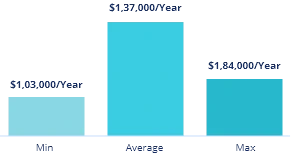
What is the salary range for agentic AI engineers in 2026?
What does an Agentic AI engineer do?
- Building AI agents
- Developing RAG pipelines
- Integrating APIs and databases
- Orchestrating multiple agents
- Implementing guardrails
- Monitoring and deploying AI applications
What does an Agentic AI engineer do?
- Building AI agents
- Developing RAG pipelines
- Integrating APIs and databases
- Orchestrating multiple agents
- Implementing guardrails
- Monitoring and deploying AI applications
How do I prepare for an agentic AI engineer interview?
What is the difference between agentic RAG and traditional RAG?
Traditional RAG retrieves documents once and passes them to the language model. Agentic RAG lets an AI agent decide whether to retrieve, what to search for, whether the results are good enough, and whether to rewrite the query or search elsewhere. This improves answer quality on complex questions but adds latency and cost.
| Criteria | Traditional RAG | Agentic RAG |
|---|---|---|
| Retrieval | Single retrieval step | Iterative; the agent decides when and how to retrieve |
| Query handling | Uses the user's query as-is | Rewrites, expands or decomposes the query |
| Quality checks | None built in | Scores retrieved chunks for relevance and re-retrieves if needed |
| Fallback when the knowledge base fails | Answers from poor context or hallucinates | Falls back to another source such as web search (Corrective RAG) |
| Multi-step questions | Struggles | Handles multi-hop reasoning, including via knowledge graphs (GraphRAG) |
| Latency and cost | Lower | Higher, since there are more model calls |
| Complexity | Simple pipeline | Needs orchestration, for example with LangGraph |
| Best for | FAQs and simple document Q&A | Complex, high-stakes or multi-source questions |
| Where you learn it | Modules 4–5 | Module 14 |
When to use which:
- Use traditional RAG when questions are simple, the knowledge base is clean, and speed and cost matter most.
- Use agentic RAG when answers must be verified, queries are ambiguous or multi-part, or one source isn't enough.
- In either case, measure quality with metrics such as faithfulness, answer relevancy and context recall (RAGAS, covered in Module 14).
What is the difference between deep agents and simple agents?
How long does it take to learn agentic AI?
How do I choose between LangGraph and CrewAI for multi-agent systems?
Choose LangGraph when you need precise control over state, branching, loops, persistence and human approval steps. Choose CrewAI when your problem maps naturally to a team of role-based agents handing work to each other. Many production systems combine them, with LangGraph orchestrating the workflow and CrewAI handling collaborative sub-tasks.
| Criteria | LangGraph | CrewAI |
|---|---|---|
| Core idea | Stateful graph of nodes and edges | Team of role-based agents (Agent, Task, Crew, Process) |
| Control over flow | Fine-grained: conditional edges, cycles, parallel branches | Higher-level: sequential or hierarchical processes |
| State management | Explicit typed state shared across nodes | Task outputs passed between agents |
| Persistence and recovery | Built-in checkpointers (SQLite, Redis), resume after failure | Limited out of the box; typically handled in your own code |
| Human-in-the-loop | Native interrupts and approval gates | Possible, but less granular |
| Learning curve | Steeper, since you design the graph | Gentler, since you define roles, goals and tasks |
| Best for | Long-running, auditable, production workflows | Research, content and analysis pipelines with clear role handoffs |
| Where you learn it | Modules 7–8 | Module 13 |
When to use which:
- Use LangGraph for approval workflows, self-correction loops, order-processing state machines and anything that must survive crashes.
- Use CrewAI for a researcher, analyst and writer style crew that produces a report.
- Use both when you need a controlled workflow where one step is a collaborating crew. The course capstone takes this hybrid approach.
Is this course hands-on or lecture-heavy?
70% hands-on labs, 30% theory. Each live module includes a guided demo and a hands-on lab where you build alongside the instructor. You ship 5+ projects, not watch 14 lectures. Every module assessment is a graded end-to-end project — theory is always paired with practice.
What is LangChain and why is it used for agentic AI?
- Connect LLMs with tools
- Retrieve information
- Build agent workflows
- Create multi-step AI applications
What is the difference between LangChain and LangGraph?
Short answer: LangChain provides the building blocks for LLM applications, such as prompts, tools, retrievers, memory and chains. LangGraph builds on those blocks to run them as a stateful graph with branching, loops, persistence and human approval. Use LangChain for linear pipelines and LangGraph when the workflow needs to adapt or recover.
| Criteria | LangChain | LangGraph |
|---|---|---|
| Purpose | Components and chains for LLM apps | Orchestration of stateful, multi-step agent workflows |
| Flow | Mostly linear (prompt → model → parser) | Conditional, cyclical, parallel |
| State and persistence | Conversation memory | Shared typed state with checkpointing |
| Best for | RAG pipelines, simple agents, tool calling | Complex agents, approvals, self-correction |
| Where you learn it | Modules 5–6 | Modules 7–8 |
Can I use open-source LLMs like Llama instead of OpenAI?
What are the prerequisites for the capstone project?
How often are new batches of this course launched?
Can employers sponsor employees for this course?
What happens if I fail the certification exam?
What is LangGraph and why is it used for agentic AI?
- State management
- Conditional routing
- Cycles
- Checkpointing
- Human-in-the-loop interactions
Is there a guarantee that I will get a job after completing this course?
What is CrewAI and how is it used in multi-agent systems?
What is DSPy and how is it used in AI applications?
- Reusable components
- Structured prompting
- Evaluation
- Optimization
