

Advanced Executive Certificate in Supply Chai ...
- 1k Enrolled Learners
- Weekend/Weekday
- Live Class
(50)


 Copy Link!
According to a survey report by PMI, it was discovered that because of ineffective communications, one out of every five projects is unsuccessful. To ensure a project’s success, a project manager must curate effective project communication management. In this Project Communication Management article, I will be giving you a complete walkthrough of how systematic communication is established in a project and what are the various processes involved in it.
To master all the concepts of Project Management, you can check out our structured PMP Course, where you will be guided by the PMP certified instructors.
Project Communication Management, according to PMBOK® Guide – Sixth Edition,
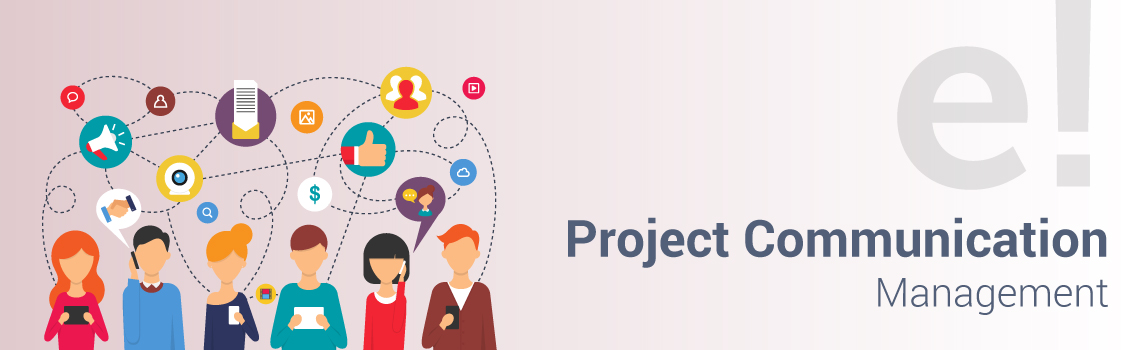 It is one of the ten key Knowledge Areas that lays the foundation of Project Management framework and plays a major role in keeping the entire project team on the same page. Without proper communication management, the entire project management framework can crumble down, as a lack of communication may result in the breakdown in various processes. This can further have a negative effect on the final deliverable and thus result in an unsuccessful project.
Project Communications Management covers various processes which ensure that the correct project information is delivered to the correct teams and at the correct time. Effective communication helps in establishing a healthy relationship between diverse stakeholders with varying cultural and organizational backgrounds, expertise levels, interests, and perspectives. Altogether they can influence the project execution and the final product. The complete process of project communications management is an aggregation of two parts:
On average, a project manager spends approx 85-90% of his total project time in communicating. Thus for a project manager, maintaining an effective communication flow becomes very important. In order to do so, he must decide on a project strategy at the very beginning of the project and follow it throughout the project lifecycle. Some of the highly recommended skills for a project manager that help in establishing effective communication are listed below:
Along with the above-listed skills, a project manager must also follow the 5 C’s of communication that will help in creating an uninterrupted and systematic communication throughout the project. These five C’s are:

In terms of project management, communication can be of various types:
I hope now you have a better understanding of what project communication management is. In the next section, I will be talking about how communication management benefits an organization.
The project communication management Knowledge Area is made up of the following three processes:

Plan Communication Mangement is the initial process of project communication management knowledge area. In this process, a systematic and effective plan is developed for the activities involved in project communication. It majorly makes use of the information like the requirement of each and every stakeholder and teams, organizational assets available and the project needs. Plan communication management process is performed in periodic intervals throughout the project life cycle. It primarily helps in the timely presentation of the relevant data through a documented approach that keeps the stakeholders engaged in an efficient manner.
Plan communication management involves various inputs, tools & techniques and outputs which I have listed in the below table:
| Inputs | Tools & Techniques | Outputs |
|
|
|
The second process of project communication management is Manage Communications which mainly aims to collect, create, distribute, store, retrieve, manage, monitor and finally dispose of the project information in an appropriate and timely manner. It is performed throughout the project lifecycle in order to provide an effortless and efficient flow of information from the project team to stakeholders and vice-versa. This process also helps in identifying different aspects of effective communication along with the most suitable methodologies, technologies, and techniques. Furthermore, it allows the entire communication system to be more flexible by providing space for any adjustments in methods and techniques. It helps in accommodating the changing demands and needs of the stakeholders without disrupting the communication flow.
Related Article – Interpersonal Communication Examples
In the below table I have listed down the complete list of inputs, tools & techniques and outputs involved in the process of Manage Communications:
| Inputs | Tools & Techniques | Outputs |
|
|
|
Monitor Communications is the final process of the communication management knowledge area. This process ensures that all the information needs and requirements of the project and the involved stakeholders are met by its completion. It is performed throughout the project lifecycle and helps in optimizing the flow of the information as per the communication management and stakeholder engagement plan.
Below table contains the list of various inputs, tools & techniques and outputs involved in the final process of project communication management:
| Inputs | Tools & Techniques | Outputs |
|
|
|
So, this was all about Project Communication Management. If you wish to learn more about project management methodologies or project management certifications, you can check my other articles as well.
If you found this “Project Communication Management” article relevant, check out the PRINCE2 Certification by Edureka, a trusted online learning company with a network of more than 250,000 satisfied learners spread across the globe.
Find out our PMP Training in Top Cities/Countries
| India | Other Cities/Countries |
| Bangalore | UK |
| Hyderabad | US |
| Pune | Canada |
| Chennai | Australia |
| Mumbai | Singapore |
| Kolkata | Saudi Arabia |
Got a question for us? Please mention it in the comments section of this Project Communication Management article and we will get back to you.

























 REGISTER FOR FREE WEBINAR
  Thank you for registering Join Edureka Meetup community for 100+ Free Webinars each month JOIN MEETUP GROUP


